
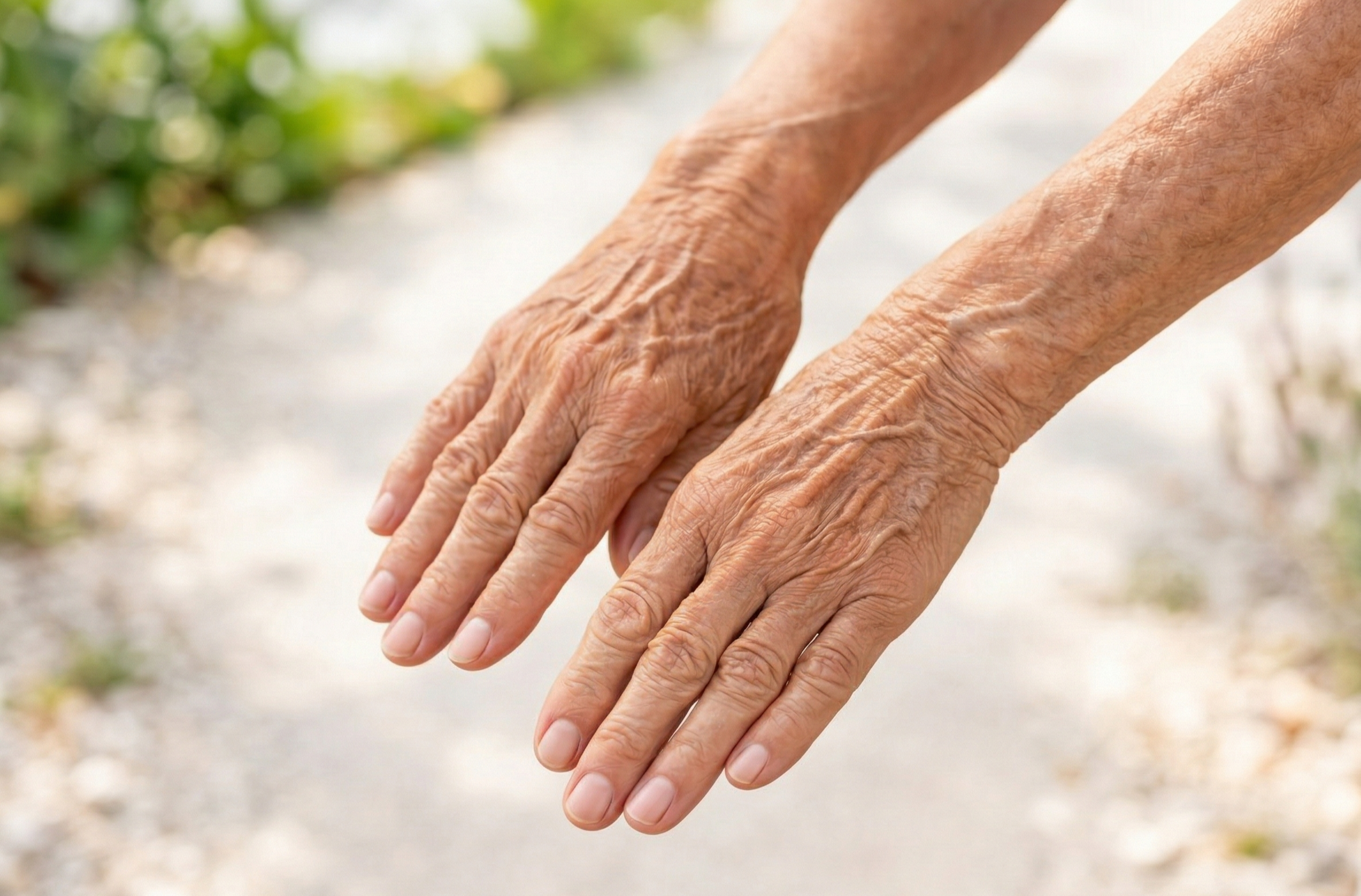
Your hands are one of the most sun-exposed parts of your body, and they rarely get the same protection as your face. Over time, that unprotected UV exposure leads to excess melanin deposits that show up as dark spots, uneven tone, and visible signs of photoaging.
At Freya’s Laser & Body Sculpting in Prescott, AZ, we use the Alpha Pro 3D IPL to target and break down that accumulated pigment while stimulating new collagen production beneath the surface. The result is clearer, more even skin on the hands, without surgery or significant downtime.
Why Your Hands Age Faster Than Almost Everything Else
The skin on your hands is naturally thinner than the skin on most other parts of your body. It has fewer oil glands, less subcutaneous fat, and a weaker moisture barrier. All of that makes it more vulnerable to environmental stressors, and UV exposure sits at the very top of that list.
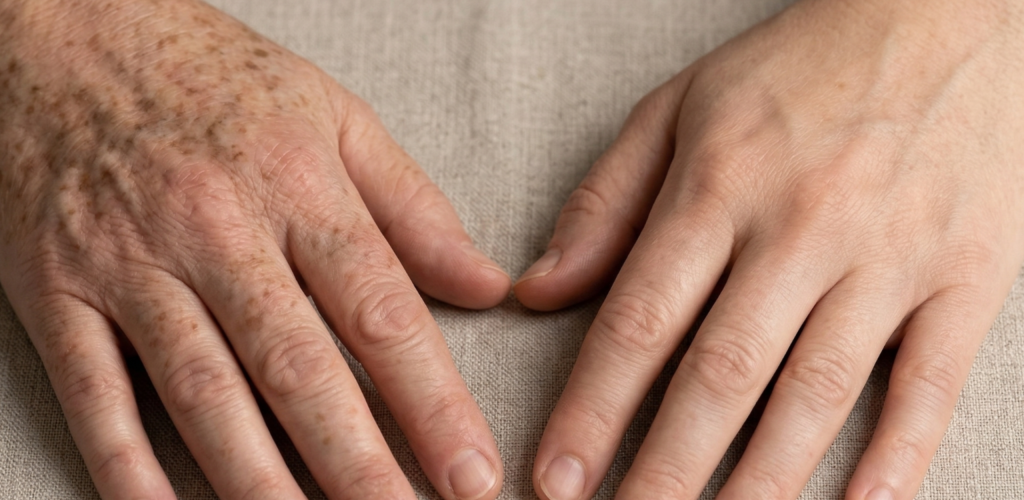
When ultraviolet light hits the skin on your hands repeatedly over years and decades, it causes a process called photoaging. Photoaging is different from the natural aging that happens to everyone regardless of sun exposure. It is accelerated, cumulative, and largely preventable. But once the damage is done, it becomes visible in very specific ways.
The most common sign is solar lentigines. You might know them as sun spots, age spots, or liver spots (they have nothing to do with your liver, by the way). These flat, brown or tan patches develop because UV radiation stimulates the melanocytes in your skin to overproduce melanin and deposit it unevenly. Over time, those deposits become permanent fixtures.
Beyond the spots, chronic UV exposure breaks down collagen and elastin fibers in the dermis. That’s the structural layer beneath the surface. When those fibers weaken, the skin loses its ability to snap back. It starts to look loose, papery, and fragile. Veins and tendons become more visible because there’s simply less tissue padding them.
And because most people don’t apply sunscreen to their hands with the same diligence they use on their face and neck, the hands often accumulate decades of unprotected exposure. It’s no wonder they’re frequently the body part that “gives away” someone’s age.
So What Exactly Is IPL, and How Does It Actually Work?
IPL stands for Intense Pulsed Light. If you’ve heard of it before, you might associate it with photofacials for the face. But the technology works beautifully on the hands too, and the science behind it is worth understanding because it’s genuinely fascinating.
The Light Itself
Unlike a laser, which emits a single, concentrated wavelength of light, IPL delivers a broad spectrum of light wavelengths simultaneously. Think of it this way: a laser is like a single note played on a piano, while IPL is more like a chord. Multiple wavelengths working together allow the device to target different types of chromophores (that’s the scientific term for color-absorbing molecules) at the same time.
This is important because sun-damaged hands often have multiple concerns happening at once. There may be brown pigment from melanin deposits, redness from dilated or broken blood vessels, and a general dullness from collagen degradation. A broad-spectrum device can address all of these in a single treatment session.
What Happens Under the Skin
When the IPL handpiece delivers a pulse of light to the skin, that light energy travels through the epidermis (the outer layer) and into the dermis (the deeper structural layer). Once there, the light is absorbed by specific targets based on color.
Melanin in sun spots absorbs the light energy and converts it into heat. That heat causes the pigmented cells to break apart into smaller fragments. Over the following days and weeks, your body’s immune system recognizes these fragments as cellular debris and clears them away through your lymphatic system. On the surface, you’ll see the spots darken first (which is completely normal and actually a sign that the treatment is working), then gradually flake off or fade.
Hemoglobin in red blood cells absorbs different wavelengths of the same light pulse. This allows the IPL to simultaneously target small dilated blood vessels and areas of diffuse redness. The heat coagulates these vessels, and your body reabsorbs them naturally over time.
Collagen stimulation is the third benefit, and it’s the one that takes a bit longer to show up. The controlled thermal energy delivered into the dermis creates a mild wound-healing response. Your body interprets the gentle heat as a signal to produce new collagen fibers. Over the weeks following treatment, these fresh collagen fibers gradually improve the skin’s thickness, firmness, and overall texture.
Why “3D” Matters
The “3D” in Alpha Pro 3D IPL refers to the system’s ability to adjust three critical parameters independently: energy level, pulse duration, and cooling intensity. This three-dimensional control means every treatment can be precisely calibrated to your specific skin type, the depth of your pigmentation, and the sensitivity of the area being treated. This is also why we see actual 3D changes in the skin such as texture, pores, and wrinkle reduction, which is not typical for IPL technology.
The Alpha Pro also includes a built-in diagnostic tool called MILO, which is a digital melanin reader. Before treatment begins, MILO measures the exact melanin content in the treatment area. This eliminates guesswork and ensures that the energy settings are customized to your individual skin, which significantly reduces the risk of burns or hyperpigmentation. It’s the kind of precision that makes a real difference in outcomes, especially when treating the hands, where the skin is thin and the margin for error is smaller.
What Makes the Hands Such a Good Candidate for IPL Treatment?
Not every treatment works equally well on every body part. But IPL happens to be an excellent match for the hands for several reasons.
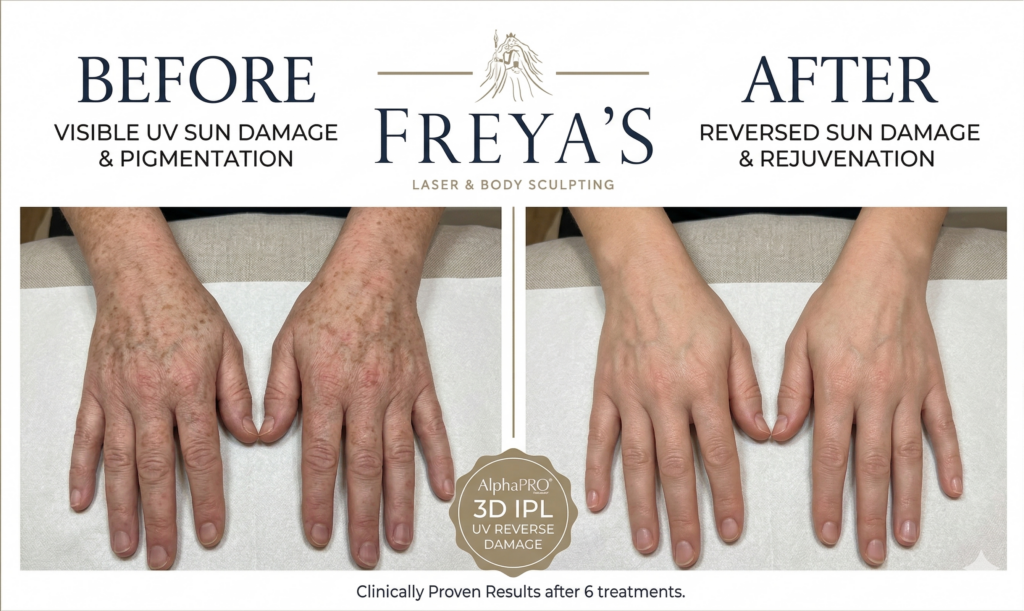
First, the most common type of damage on the hands is pigment-related. Sun spots are overwhelmingly the number one aesthetic concern people have about their aging hands. Because IPL is specifically designed to target excess melanin, it goes directly after the problem rather than working around it.
Second, the skin on the hands, while thin, responds well to the collagen-stimulating effects of IPL. Even a modest boost in collagen production can make the skin on the hands look plumper, smoother, and less translucent. That means you get both the color correction from the pigment targeting and an overall textural improvement from the collagen remodeling.
Third, IPL treatment on the hands involves very little downtime. The skin restoration treatments we offer in Prescott are designed for people with full, busy lives. After an IPL session on the hands, you can expect some mild redness and possibly slight swelling for a few hours. Treated sun spots will darken over the next several days before gradually flaking off. Most people go right back to their normal activities afterward.
What to Expect During an Alpha Pro 3D IPL Session for Your Hands
If you’ve never had IPL before, it helps to know what the actual experience is like. It’s a straightforward process, and most people are surprised by how quick and manageable it is.
Your session begins with a skin assessment. We’ll examine the backs of your hands, note the types and distribution of spots, check for any areas of redness or vascular concerns, and use the MILO melanin reader to measure your skin’s pigment level. This step is what allows us to dial in the precise energy settings for your treatment.
Next, a cooling gel is applied to the treatment area. You’ll wear protective eyewear to shield your eyes from the light pulses. The Alpha Pro handpiece is then guided across the backs of your hands, delivering controlled pulses of broad-spectrum light. Each pulse feels like a quick snap, similar to a rubber band lightly flicking the skin. The integrated cooling system on the Alpha Pro keeps the surface of the skin comfortable during treatment.
A typical session for both hands takes about 20 to 30 minutes. There are no incisions, no needles, and no anesthesia required.
After Treatment: The Days and Weeks That Follow
Here’s what the recovery timeline generally looks like after IPL on the hands:
Days 1 to 3: Mild redness and warmth, similar to a light sunburn. Treated pigmented spots will begin to darken. This darkening is expected and is actually a positive indicator that the melanin has absorbed the light energy properly.
Days 4 to 10: The darkened spots will start to crust lightly and then gradually flake or shed. It’s important not to pick at them. Let them come off naturally. The skin underneath will be lighter and more even in tone.
Weeks 2 to 6: Continued fading and evening of skin tone. This is also when the collagen remodeling process really gets going. You may notice that the skin on your hands starts to feel slightly firmer and look a bit less translucent.
Months 2 to 4: Full collagen remodeling results become visible. Skin texture continues to improve. Many clients say this is when they notice the most dramatic overall change in how their hands look.
Most people see strong results after three to five sessions, spaced about three to four weeks apart. The exact number depends on the extent of your sun damage and how your skin responds to treatment.
IPL for Hands vs. Other Treatment Options: How They Compare
You have choices when it comes to treating sun-damaged hands. Here’s how IPL stacks up against some of the other common approaches:
Treatment | Targets Pigmentation | Stimulates Collagen | Typical Downtime |
Alpha Pro 3D IPL | Yes, very effectively | Yes | Minimal (a few hours of redness) |
Chemical Peel | Moderate | Somewhat | Several days of peeling |
Cryotherapy (freezing) | Individual spots only | No | 1–2 weeks of crusting |
Topical Creams (Rx) | Gradual, mild improvement | No | None, but results take months |
Laser Resurfacing | Yes | Yes, significantly | 5–14 days of healing |
IPL occupies a sweet spot for many people. It delivers real, visible correction for pigmentation while also improving skin quality through collagen remodeling, all with far less downtime than ablative laser resurfacing and far better results than topical creams alone.
Who Is a Good Candidate (and Who Should Think Twice)?
IPL works best on fair to medium skin tones, generally classified as Fitzpatrick skin types I through IV. This is because the technology relies on contrast between the pigmented target (the sun spot) and the surrounding skin. When that contrast is high, the light energy can be absorbed precisely where it’s needed.
For darker skin tones, there is a higher risk of the surrounding melanin absorbing too much energy, which can lead to hyperpigmentation or hypopigmentation. That’s why the Alpha Pro’s MILO melanin reader is so valuable. It gives us an objective measurement rather than relying on visual assessment alone, and it helps us determine whether IPL is a safe and effective choice for your specific skin type.
Good candidates for IPL hand treatment include people who:
- Have visible sun spots, age spots, or uneven pigmentation on the backs of their hands and want noticeable improvement without significant downtime
- Are willing to commit to a series of sessions and diligent sun protection afterward to maintain their results long-term
If you have very dark skin, active infections on the hands, or are currently taking photosensitizing medications, IPL may not be the right fit, and we’ll discuss alternative options during your consultation at our Prescott med spa.
Protecting Your Results: Why Aftercare Matters More Than You Think
Getting IPL treatment is an investment in your skin. Protecting that investment requires a shift in how you treat your hands going forward.
The single most important thing you can do after IPL is wear sunscreen on your hands. Every day. Even on cloudy days. Even in winter. SPF 30 or higher, reapplied after washing your hands or spending extended time outdoors. This is not optional if you want your results to last. Sun exposure after treatment can trigger new melanin production and undo the correction you just achieved.
Beyond sunscreen, keeping the skin on your hands well-moisturized helps maintain the improved texture from collagen remodeling. A good hand cream with ceramides or hyaluronic acid applied throughout the day makes a noticeable difference over time. If you drive frequently, consider wearing UV-protective driving gloves. The windshield blocks UVB rays but not UVA, and UVA is the wavelength most responsible for pigmentation and photoaging.
Many of our clients in Prescott also choose to schedule maintenance IPL sessions once or twice a year to keep their results looking fresh, especially because the Arizona sun does not take days off.
Combining IPL With Other Treatments for Even Better Results
One of the things we love about IPL is how well it pairs with other treatments. For clients who want comprehensive hand rejuvenation, we often recommend combining IPL with complementary procedures from our skin restoration menu in Prescott.
For instance, pairing IPL with NOUVADerm laser skin resurfacing can address deeper textural concerns that IPL alone may not fully resolve. NOUVADerm uses fractionated laser energy to create microscopic treatment zones in the skin, triggering a more intensive collagen and elastin response. When you layer that on top of the pigment correction and gentle collagen boost from IPL, the results are remarkably thorough.
For those dealing with skin concerns beyond the hands, the Scarlet SRF microneedling treatment available at our Prescott clinic is an outstanding option for tightening and rejuvenating the face, neck, and other areas where laxity is a concern. It uses radiofrequency energy delivered through microneedles to stimulate deep collagen production, and many clients choose to treat their face with Scarlet SRF while addressing their hands with IPL during the same visit.
A Note on Prevention: It Is Never Too Late (or Too Early) to Start
If you’re reading this and thinking, “My hands don’t have sun spots yet,” that’s wonderful. Now is the time to protect them. Daily sunscreen on the hands, a solid moisturizing routine, and periodic skin assessments can go a long way toward keeping UV damage from accumulating in the first place.
And if you’re looking at hands that already show significant sun damage? Don’t feel discouraged. IPL is specifically designed to reverse this kind of damage. The technology exists precisely because this is such a common concern, and the results are consistently impressive. We see it every week in our treatment room.
Your Hands Deserve the Same Attention as Your Face
We invest in facials, retinol, eye creams, and all sorts of treatments to keep our faces looking their best. But our hands are just as visible, just as expressive, and just as affected by the passage of time and sun exposure.
The Alpha Pro 3D IPL makes it possible to reverse years of UV damage on the hands with a treatment that is quick, comfortable, and remarkably effective. Whether you’re dealing with scattered sun spots or a full constellation of pigmented patches across both hands, this technology can help restore a more even, youthful appearance without putting your life on hold.
If you’re ready to give your hands the same care your face gets, we’d love to help you get started. Book a free consultation and let’s talk about what’s possible for your skin. Call us at (928) 910-1810 or schedule your appointment online.
Frequently Asked Questions
Most clients see their best results after three to five sessions, spaced about three to four weeks apart. The number depends on how much sun damage is present and how your skin responds. Some people with lighter damage see significant improvement in just two sessions.
Most people describe the sensation as a quick, warm snap against the skin, similar to a rubber band flick. The Alpha Pro’s integrated cooling system keeps the surface of the skin comfortable throughout the treatment. The hands are slightly more sensitive than the face for some people, but the vast majority of clients tolerate it well without any numbing cream.
IPL is highly effective at dramatically reducing and often fully eliminating visible sun spots. Very deep or stubborn spots may require additional sessions or a combination approach. During your consultation, we’ll give you a realistic picture of what to expect based on the specific condition of your skin.
Yes. Avoid sun exposure and tanning for at least two weeks before treatment. Do not use self-tanning products on your hands. Discontinue any retinol products on the treatment area for about a week beforehand. If you’re taking any photosensitizing medications, let us know during your consultation so we can advise you appropriately.
Results can last a year or longer with proper sun protection. The pigmentation correction from IPL is long-lasting, but your skin is still exposed to the sun every day, so new spots can develop over time if the hands aren’t protected. That’s why we recommend daily sunscreen and periodic maintenance treatments at our Prescott med spa to keep your hands looking their best year-round.