A clear look at how ionized gas firms the skin, what it can treat, and where it fits among today’s skin-firming options.
Plasma skin tightening is a non-surgical treatment that uses ionized gas, called plasma, to firm the skin and prompt it to build fresh collagen. It has become one of the more talked-about options for people who want visibly tighter skin without the recovery that surgery involves.
The approach rests on a straightforward biological fact. When skin receives a controlled dose of energy, it responds by repairing and rebuilding itself. Plasma is one way to deliver that energy with precision, and the payoff is skin that looks firmer as new collagen forms over the weeks that follow.
Below, we look at how plasma firms the skin and where it sits among the other options people tend to weigh.
What is plasma, exactly?
Beyond the everyday states of matter lies a fourth one, plasma. It forms when a gas gains enough energy that some of its atoms become electrically charged, turning the gas into a cloud of energized particles able to carry controlled heat.
Plasma is more common than it sounds. The sun is a natural example, and a neon sign is an everyday one. In aesthetic medicine, that same physics is scaled down and kept under tight control. A device converts a gas into plasma and applies its energy to the skin in careful, measured amounts. That precision is the point, since it lets a provider place energy where the skin needs it while sparing the tissue around it.
How does plasma tighten the skin?
Plasma firms skin through two effects that play out on different timelines. The first is immediate. Collagen behaves a little like a spring, and when gentle, controlled plasma energy meets the skin, existing collagen fibers contract and shorten, which produces a tighter look you can often notice the same day.
The second effect unfolds over weeks. The controlled energy triggers the skin’s wound-healing response, a process dermatologists call fibroplasia. During this phase, fibroblasts, the cells that manufacture collagen and elastin, become more active and lay down fresh support structure in the dermis. As that new collagen matures, the skin keeps firming and smoothing for months after treatment.
Part of what keeps the process controlled is how the skin reacts to the energy. As plasma warms the surface, it draws out moisture and forms a thin, dried protective layer. That layer shields the tissue underneath and helps spread the energy evenly, so the treatment stays measured rather than aggressive. The dried surface then sheds naturally as fresh skin forms beneath it.
37% In a clinical study of plasma skin regeneration, researchers measured a 37 percent reduction in facial wrinkles three months after treatment, with a fresh band of collagen visible in skin samples. Source: Plasma skin regeneration study, PubMed (National Library of Medicine) |
What are the main types of plasma skin tightening?
Plasma skin tightening is an umbrella term, and two main approaches sit beneath it.
Plasma pen and fibroblast treatments. These use a pen-like device that emits a tiny arc of plasma just above the skin without touching it. Each arc creates a precise point on the surface through sublimation, where tissue converts directly from solid to vapor. The method is popular for small, focused areas such as hooded eyelids and lines around the mouth, and it leaves tiny carbon crusts that flake away as the skin heals.
Plasma resurfacing and regeneration systems. These deliver plasma energy across a wider area to renew the skin more broadly. Nitrogen-based systems, along with newer dual-gas platforms that pair nitrogen with argon, warm the dermis to stimulate collagen while refining tone and texture at the surface. This category suits people who want overall rejuvenation rather than spot correction.
The right approach depends on the goal. A focused concern like a hooded eyelid may call for the precision of a plasma pen, while broad loss of firmness across the cheeks or neck is better matched to a resurfacing system that treats the whole area in one pass.
A NOTE ON DEVICES AND PROVIDERS Plasma devices vary widely in design and oversight. Some plasma pen products marketed for at-home use fall outside medical regulation, and the U.S. Food and Drug Administration has cautioned that it has not cleared plasma pen devices for aesthetic skin treatments. For safety and predictable results, plasma skin tightening is best carried out by a trained, licensed provider in a clinical setting. |
What can plasma skin tightening treat?
Plasma treatments are used across the face and body for concerns tied to laxity and texture. The technology is precise enough to work on delicate areas like the eyelids and broad enough to cover wider zones such as the neck. Common uses include:
- Loose or crepey skin on the eyelids and around the eyes
- Fine lines and wrinkles, including the lines that form around the mouth
- Softening along the jawline and neck
- Uneven texture, acne scarring, enlarged pores, and general dullness
What does treatment and recovery involve?
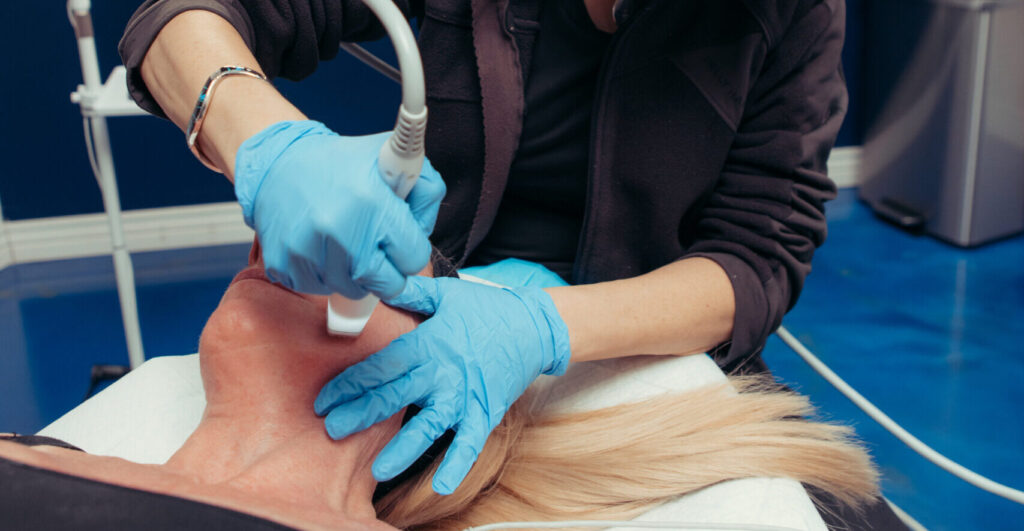
A plasma session opens with a consultation and a cleanse, followed by a topical numbing cream applied for comfort. The provider then guides the device across the treatment area in a measured pattern. Most sessions run from roughly twenty minutes to an hour, depending on the size of the area.
Recovery tracks with intensity. Lighter, surface-focused treatments tend to cause mild redness that settles within a day or two. Deeper plasma resurfacing brings a longer healing window, often several days of redness and light flaking as the treated surface renews. In both cases, the visible firming continues to develop as new collagen forms, with results building over roughly one to three months. Sun protection matters throughout recovery, and most providers suggest a short break from heat and vigorous exercise while the skin settles. Gentle skincare during the first week supports the healing surface.
Does plasma skin tightening hurt?
Comfort is managed carefully. A topical numbing cream is applied before the session and given time to take effect, so most people describe the treatment as a warm, prickling sensation rather than sharp pain. Deeper resurfacing feels more intense than a light surface pass, and your provider adjusts the settings and pacing to keep you at ease throughout. Any warmth or sensitivity afterward usually eases within the first day.
How long do the results last?
The early tightening you see from collagen contraction is a preview. The longer-lasting change comes from the new collagen your skin builds afterward, which can hold for a year or more when supported by consistent sun protection and a steady skincare routine. Because skin keeps aging, many people schedule occasional maintenance sessions to preserve the effect and keep building on it over time.
How well results last also depends on habits outside the clinic. Sun exposure and smoking both break collagen down faster, so daily sun protection does real work in guarding what the treatment builds. Many providers suggest a light maintenance session once or twice a year, timed to your skin rather than a fixed date on the calendar.
How does plasma skin tightening compare to lasers and RF microneedling?
Plasma is one of several energy-based options for firming skin. Lasers rely on focused light to renew the surface and deeper layers, while radiofrequency delivers electrical energy that heats the dermis. Plasma sits alongside them, using ionized gas to combine surface renewal with collagen stimulation.
Method | Energy source | Best known for | Typical downtime |
|---|---|---|---|
Plasma | Ionized gas | Surface renewal and collagen building | Little to several days |
Laser resurfacing | Focused light | Resurfacing and tone correction | A few days to two weeks |
RF microneedling | Radiofrequency via micro-needles | Deep firming and acne scars | About one to two days |
At Freya’s, plasma pairs naturally with our other firming options. Clients focused on deeper structural tightening often consider RF microneedling in Prescott with Scarlet SRF or Agnes RF, while those weighing broader surface renewal explore laser skin resurfacing in Prescott. A consultation is the clearest way to match the method to your skin. No single method is best for everyone, and the right choice depends on your specific concern and how much recovery time fits your life.
Who is a good candidate for plasma skin tightening?
Plasma skin tightening suits adults who want firmer skin and are comfortable trading a little recovery for meaningful change. Plasma resurfacing systems work well across a wide range of skin tones, since their energy does not depend on pigment, which lowers the risk of unwanted pigment changes after treatment. It also appeals to people who prefer to avoid surgery and like a treatment they can build on gradually with repeat sessions.
As with any energy-based treatment, some situations call for caution or a different plan, including active skin infections and a history of keloid scarring. Pregnancy is another reason to wait. A qualified provider will review your history and confirm whether plasma is the right fit, and can position it within a broader menu of non-surgical skin treatments in Prescott to match your goals.
What is PLADUOpro, and how does it go beyond basic plasma skin tightening?
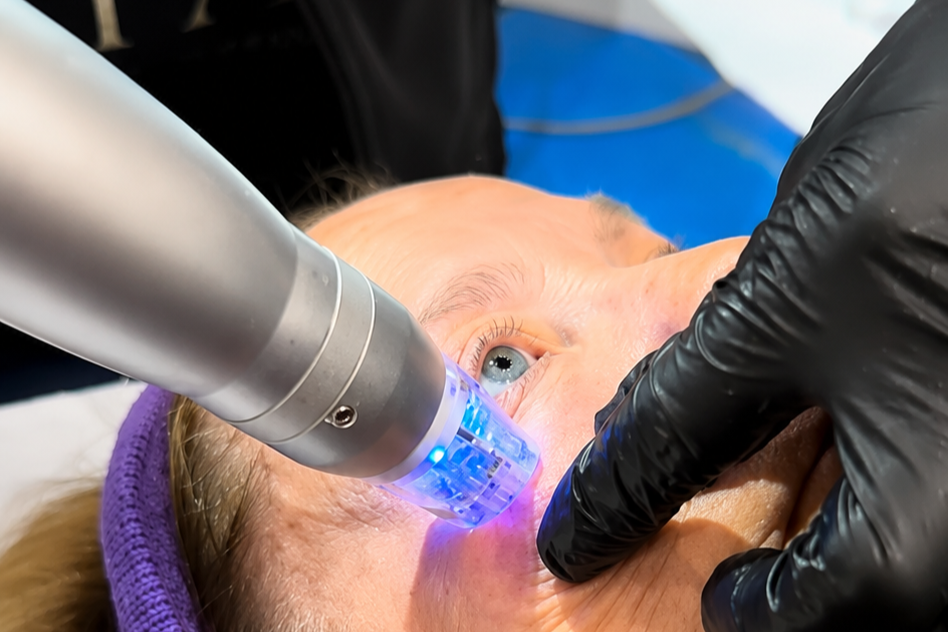
At Freya’s Laser & Body Sculpting, our plasma work centers on PLADUOpro, a dual-gas system that pairs nitrogen and argon plasma in a single device. It was the first platform of its kind to bring both gases together, and it grew out of more than two decades of research. In practice, that means one treatment can reach the deeper layers where firmness is built while also refining the surface, with the intensity dialed to each client’s skin and comfort.
Most plasma skin tightening relies on a single energy pathway. A basic plasma pen works only at the surface through sublimation, and older single-gas systems lean on one thermal effect to carry the entire treatment. PLADUOpro widens what a plasma session can accomplish by giving providers two complementary gases alongside finer control over how the energy reaches the skin.
One difference shows up in consistency. PLADUOpro delivers its energy through patented SpinShot technology, a rotating tip that spreads plasma in a 360-degree motion. Even, predictable coverage has long been a challenge with plasma, and this rotating delivery helps each pass land uniformly, which supports smoother healing and more reliable outcomes.
Another difference is control. Fifteen adjustable energy levels let a provider set the intensity to match your goals and the amount of recovery time that suits your life. A lighter session can refresh the skin with minimal interruption, while a deeper session drives more substantial regeneration. Because the two gases share the workload, the skin can reach the temperature that prompts collagen renewal while carrying a lighter overall thermal load than older single-gas plasma tended to require.
N-Toning and Ar-Toning: the two plasma modes
The heart of PLADUOpro is its pair of working modes, either of which can be chosen within the same appointment.
N-Toning uses nitrogen plasma. It works at depth, warming the dermis to prompt fibroblasts to build fresh collagen and elastin. This mode suits clients focused on firmness and fine lines, and on the deeper structural change that keeps developing as new collagen matures over the following weeks.
Ar-Toning uses argon plasma. It works at the surface through a photochemical effect that calms bacteria and soothes reactive skin, which makes it a strong choice for acne-prone and easily reddened skin. Because it stays gentle, it tends to fit neatly around a normal schedule.
Because the modes can be layered across a course of sessions, PLADUOpro can address more than one concern for the same person. Argon keeps you moving with little to no downtime, while nitrogen asks for a short recovery in exchange for deeper renewal. That range is difficult to find in a single-gas plasma device, and it is much of why we chose this platform.
You can read more about the technology and what to expect on our plasma skin tightening in Prescott page, and see real outcomes in our before-and-after gallery.
The takeaway
Plasma skin tightening earns its place by working with the skin’s own biology, prompting it to rebuild the collagen that keeps the surface firm. Results develop gradually and can last well past the treatment window, which is much of the appeal for people who prefer steady renewal over a quick fix. The honest summary is that plasma is a considered, evidence-backed way to firm skin without surgery, best chosen with a provider who can weigh it against the alternatives for your particular skin.
If you are curious whether plasma is right for your skin, schedule a consultation at Freya’s in Prescott, and we will walk you through the options in person.
References
Kilmer S, et al. “Evaluation of plasma skin regeneration technology in low-energy full-facial rejuvenation.” PubMed, National Library of Medicine, 2007. pubmed.ncbi.nlm.nih.gov/17309997
“Efficacy of Low-temperature Plasma for Treatment of Facial Rejuvenation in Asian Population.” PMC, National Library of Medicine, 2021. pmc.ncbi.nlm.nih.gov/articles/PMC8447997
Loesch MM, Somani AK, Kingsley MM, Travers JB, Spandau DF. “Skin resurfacing procedures: new and emerging options.” Clinical, Cosmetic and Investigational Dermatology, 2014;7:231-241. dovepress.com